
If you’ve ever asked your smartphone a question, watched a movie recommendation pop up on Netflix, or been amazed by a self-driving car, you’ve already encountered the power of neural networks. They’re at the heart of modern artificial intelligence (AI), quietly making sense of the world so that machines can understand and respond more like humans. But what exactly is a neural network, and why is it so essential to AI?
A Brain-Inspired Breakthrough
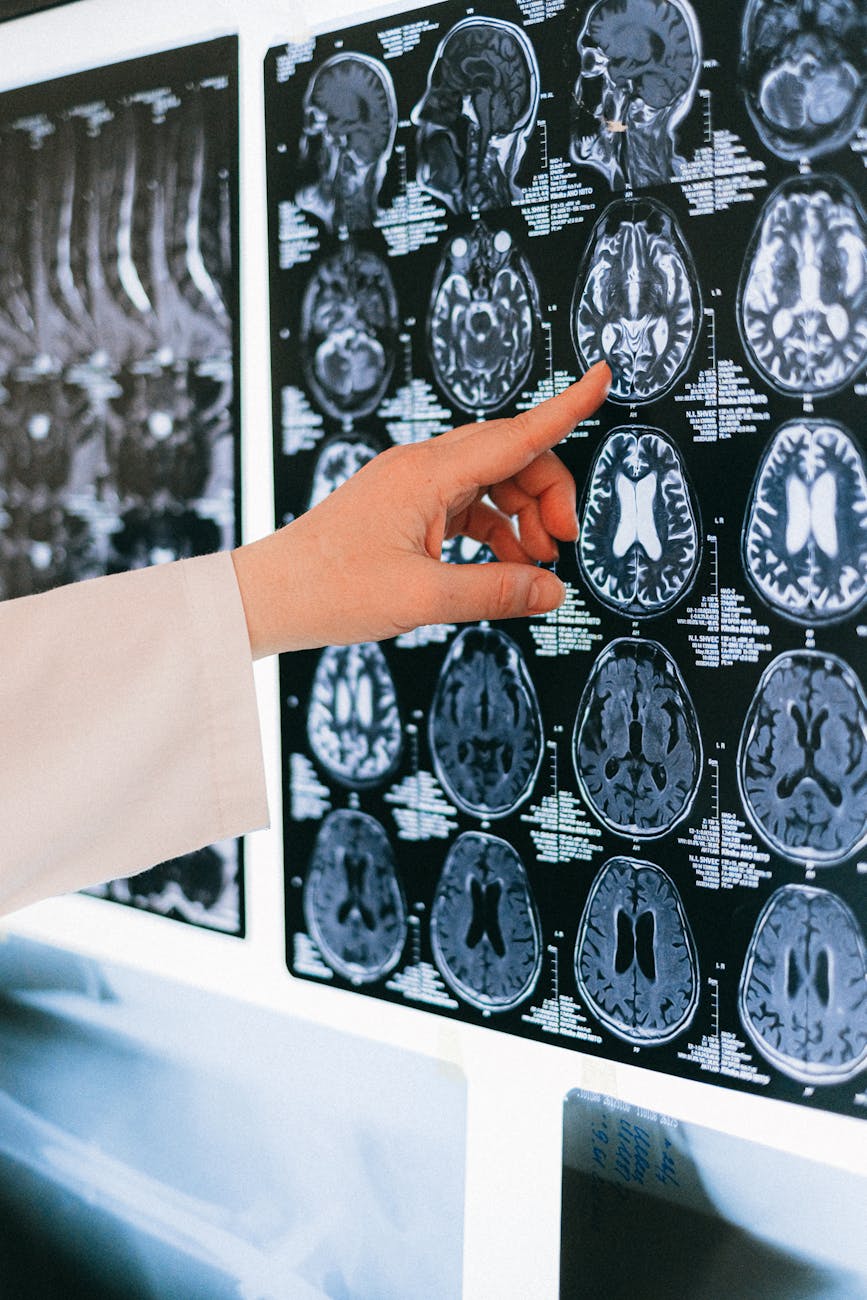
Neural networks are inspired by the structure of the human brain. Just like our brains contain billions of interconnected neurons that process information, artificial neural networks are made up of layers of nodes—also called artificial neurons—that pass data through complex pathways. These nodes work together: learning patterns, spotting relationships, and making decisions based on input data.
This brain-like setup allows computers to learn from experience. Instead of being programmed with a strict set of rules, a neural network can improve over time. By analyzing vast amounts of information, it begins to “understand” how things work. That’s why your phone can recognize your voice more accurately the more you use it—it’s learning.
How It All Connects
To understand how a neural network works, think of it as a multi-layered filter. The first layer takes in raw data—say, an image of a cat. Each node in that layer looks at a tiny piece of the image. The next layer begins identifying edges, colors, and shapes. Additional layers start piecing these features together, eventually recognizing whiskers, ears, and fur. By the time the data reaches the final layer, the network might confidently say, “That’s a cat.”
These layers and nodes work together using mathematical formulas. As data moves through, each node assigns a weight to it—basically, a value that reflects how important that piece of data is. The network adjusts these weights during a process called training, slowly fine-tuning itself to get better at making predictions or decisions.
Learning from Mistakes
Training a neural network is a bit like teaching a child. At first, the network makes a lot of errors. You show it a picture of a dog, and it might guess it’s a wolf. But with enough examples and guidance, it learns the difference. This process is often supervised by providing the correct answers during training, so the network knows when it gets something wrong and can adjust accordingly.
Behind the scenes, this happens through a method called “backpropagation,” which is a way of correcting mistakes. If the network makes a bad prediction, it works backward to figure out which weights need adjusting. Over time, this constant tweaking leads to better performance.
Different Types of Networks for Different Tasks
Not all neural networks are built the same. Some are simple, while others are deep—meaning they have many layers and are capable of understanding much more complex patterns. These are known as deep neural networks, and they’re behind many of the AI advancements we see today, ranging from language translation to image recognition.
There are also specialized networks designed for different types of data. Convolutional neural networks (CNNs) are great at processing images and video. Recurrent neural networks (RNNs) are designed to handle sequences, like sentences or time-series data, and are often used in voice recognition or text generation. Each type of network is a tool suited to a specific kind of job.
Why They Matter
Neural networks have transformed AI from a futuristic concept into a real-world tool. They’ve enabled machines to recognize speech, translate language, generate art, and even assist in medical diagnoses. Their ability to handle massive amounts of data and uncover hidden patterns has made them invaluable in industries ranging from finance to healthcare.
One key reason why they’re so powerful is that they don’t just follow rigid instructions—they adapt. This adaptability allows them to improve over time, often outperforming traditional methods in accuracy and efficiency. It’s what makes technology like facial recognition and virtual assistants not only possible, but increasingly reliable.
Limitations and Challenges
Despite their impressive abilities, neural networks aren’t perfect. They need a lot of data to learn effectively, and training them can require significant computing power. They’re also often described as “black boxes” because it’s difficult to understand exactly how they make certain decisions. This lack of transparency can be a concern, especially in sensitive areas like law enforcement or healthcare.
Moreover, they can sometimes be fooled. A small change in an image—imperceptible to a human—can cause a neural network to make a wrong prediction. This demonstrates that while these systems are smart, they don’t “understand” the world the way that humans do. They rely on patterns, not common sense.
Neural networks are still evolving. Researchers are working to make them more efficient, transparent, and capable of reasoning in more human-like ways. As these models improve, we’ll likely see AI take on even an expanded role in our daily lives—from personalized education tools to advanced scientific discovery.
Understanding neural networks can help to demystify the magic of AI. They’re not conscious and not alive, but are incredibly powerful tools. Inspired by our brains, built with mathematics, and trained with data, they’ve become the backbone of a technological revolution. And they’re just getting started.


